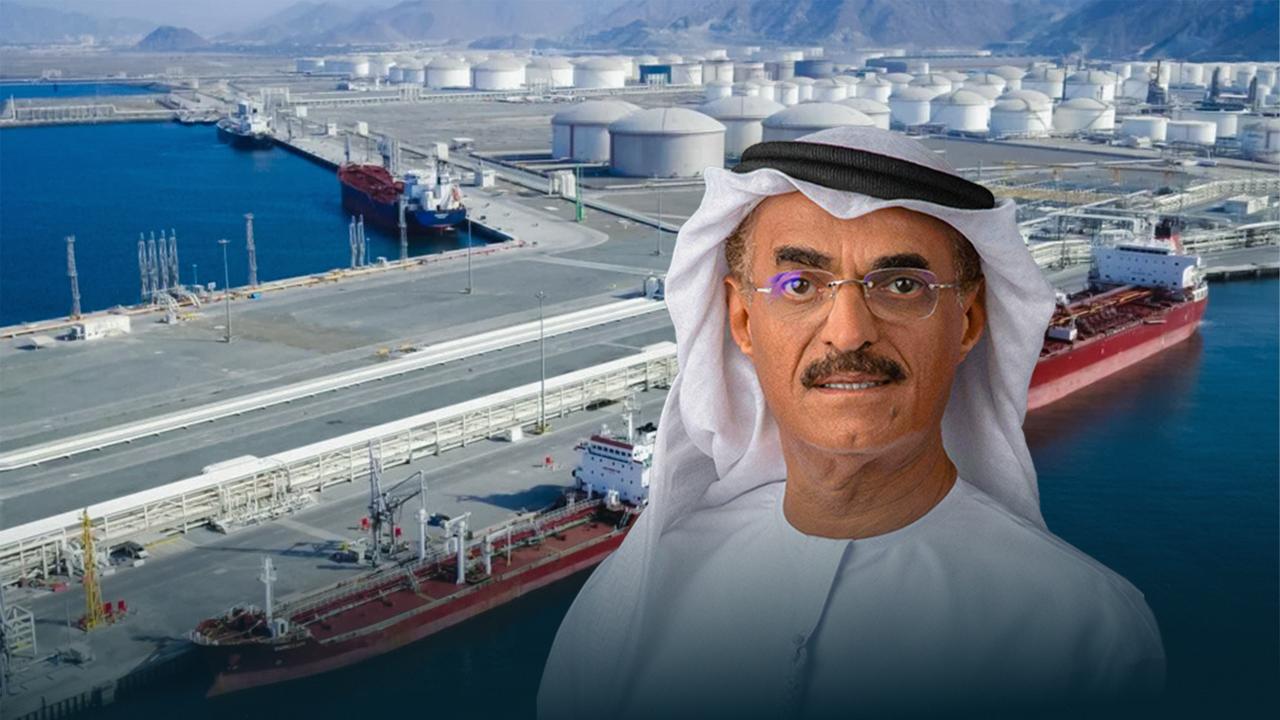
New port expansions on the UAE’s eastern coast demonstrate a strategic maritime vision that began with the nation’s leadership at the IMO Executive Council.
ABU DHABI, ABU DHABI, SHARJAH, DUBAI, UNITED ARAB EMIRATES, July 27, 2026 /EINPresswire.com/ — The UAE’s eastern-coast ports—foremost among them Khorfakkan, Fujairah, and Dibba—are entering a new phase of expansion that reflects the nation’s long-standing vision to strengthen its global maritime presence and reinforce its role in safeguarding the stability of international supply chains. These projects are not merely infrastructure upgrades; they are the natural continuation of a strategic path set years ago, when the UAE recognized that the future of global shipping required secure corridors beyond the reach of geopolitical tensions, and that building advanced maritime capabilities was part of its international responsibility toward global trade.
Today, as the Strait of Hormuz witnesses troubling incidents, restrictions on navigation, and recurring challenges, these ports have become more vital than ever. They offer the world a practical alternative that ensures the uninterrupted flow of goods and energy without added risk, reaffirming that the UAE had anticipated the future when it invested early in ports located outside the strait—ports capable of operating efficiently even under the most difficult circumstances.
A Vision Rooted in a Decade of Maritime Engagement
These new expansions cannot be separated from the maritime trajectory the UAE adopted over the past decade, nor from the pivotal moment in 2017 when the nation won Category B membership in the Executive Council of the International Maritime Organization (IMO)—one of the most competitive and influential seats in the global shipping industry.
In that year, I had the honor, as the minister responsible, of leading and overseeing this national campaign—an effort that combined diplomatic engagement, institutional coordination, national support, and the strong international reputation the UAE had built over decades of balanced and open global interaction. It was clear that the UAE was entering the competition as both a flag state and a port state: a nation with a globally compliant registered fleet, ports among the most advanced in the region, and a proven model of adherence to international maritime law.
A Strategic Necessity, Not a Diplomatic Trophy
The UAE’s presence in the IMO Executive Council was a strategic necessity rather than a ceremonial achievement.The maritime world is governed by binding regulations issued by the IMO—rules that directly shape port operations, fleet management, environmental protection, and vessel safety. Being at the executive table meant the UAE was not merely receiving these regulations, but actively participating in drafting them, understanding their details before adoption, and safeguarding its maritime achievements from legislation that might overlook regional realities or national interests.
This strategic awareness was a key reason behind the UAE’s determination to secure the seat—and a key factor in the success of the campaign. The nation understood that the future of its ports, fleets, and geographic position required an active role within the institution that sets the rules of global navigation.
Human Stories That Strengthened a National Campaign
Among the unforgettable scenes during the two election days at the IMO was the remarkable presence of expatriate professionals working in the UAE. Experts and specialists from dozens of nationalities spoke to their home-country delegations about their experience in the UAE: about a global work environment, a nation that embraced and respected their expertise, and a human and economic model that made them feel part of a larger success story.
Their sincere testimonies were more influential than any official speech, because they emerged from lived experience and reflected the UAE’s model of bringing the world together on its soil and enabling everyone to contribute to its development journey. This human diversity was one of the campaign’s hidden strengths, a source of international trust, and practical evidence that the UAE is global in its composition before being global in its ambition.
Dubai World: Operational Credibility on a Global Scale
Dubai World also played a pivotal role during that period. It was not merely a global port operator; it was tangible proof of the UAE’s ability to manage maritime facilities to world-class standards across diverse environments and cultures. Its presence in dozens of countries gave the UAE additional credibility, allowing member states to see the nation as a successful maritime operator—not simply a country aspiring to an executive seat.
Dubai World became the arm that carried confidence to the world, presenting the UAE as a nation with global operational expertise rather than just domestic infrastructure. This strengthened the UAE’s position within the IMO and affirmed that the country is not one that speaks about the sea, but one that works in it and shapes its pathways.Today, this national institution continues that role by investing in enhancing the efficiency of Fujairah’s ports.
Expansions That Validate a Long-Term Vision
With the announcement of new expansions in Khorfakkan, Fujairah, and Dibba, the fruits of the efforts made in 2017 are now clearly visible. Ports located outside the Strait of Hormuz have become anchor points for global trade amid the unfortunate events affecting the strait. What was built years ago has become an international necessity today.
These expansions strengthen the UAE’s ability to receive alternative shipping routes, ease pressure on affected corridors, and support the stability of global commerce—objectives fully aligned with the priorities of the IMO, where the UAE once held executive leadership. They also reaffirm that the UAE, as a flag state, port state, and coastal state, carries an elevated responsibility to protect maritime corridors and provide a practical model for nations whose economies depend on the sea.
A Continuation of a Vision, Not a New Chapter
What is unfolding today in the UAE’s ports is not a separate new chapter, but the natural extension of a path set years ago—when national reputation, institutional strength, human diversity, and strategic foresight converged to secure a historic victory at the IMO Executive Council.
Today, that moment is renewed through expansion projects that reinforce the UAE’s standing as a global maritime power. They affirm that the nation derives its strength from its people and from its ports, and that its presence in the IMO Executive Council was never a protocol privilege, but a strategic necessity to protect its maritime achievements and maintain direct insight into the binding regulations shaping the future of global navigation—especially in a region facing recurring challenges such as the Strait of Hormuz.
H.E. Dr. Abdulla Belhaif AlNuaimi.
Former UAE Minister of Climate Change and Environment & Chancellor of Emirates Scholar Center for Research & Studies.
Media Office
Emirates Scholar Center for Research and Studies
+971 24093159
email us here
Visit us on social media:
LinkedIn
Instagram
YouTube
X
Legal Disclaimer:
EIN Presswire provides this news content “as is” without warranty of any kind. We do not accept any responsibility or liability
for the accuracy, content, images, videos, licenses, completeness, legality, or reliability of the information contained in this
article. If you have any complaints or copyright issues related to this article, kindly contact the author above.

Media gallery