Industry professionals call for clearer frameworks around training, compliance, and consumer protection amid structural shift
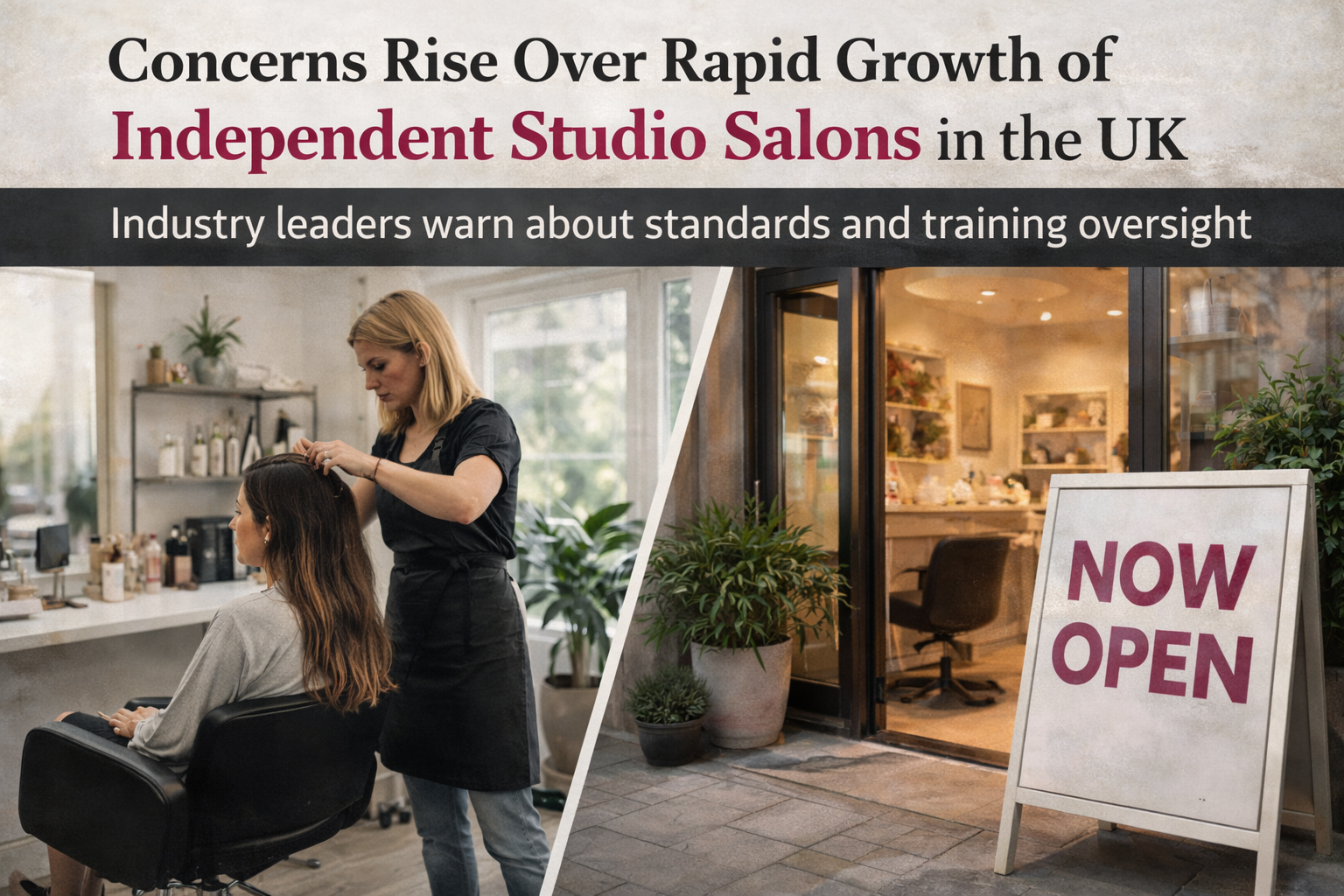
LONDON, UNITED KINGDOM, February 23, 2026 /EINPresswire.com/ — A growing debate is emerging within the UK hairdressing sector as the rapid expansion of independently operated studio based businesses prompts renewed discussion around professional standards, training continuity, and consumer protection across the industry.
While small, stylist led operations have become increasingly visible in cities and regional markets, senior salon owners, educators, and industry observers are raising questions about how evolving business structures intersect with long established pathways for professional development and regulatory oversight.
Over the past several years, more experienced stylists have chosen to operate from compact private studios or independently rented spaces rather than traditional multi chair salon environments. In many cases these businesses consist of one or two practitioners working on an appointment only basis.
Industry analysts note that the shift reflects broader workforce trends, including a desire for autonomy, flexible working arrangements, and direct client ownership. However, the pace of change has led some professionals to question whether industry frameworks have adapted sufficiently to ensure consistent training standards and consumer safeguards.
Traditional salon environments have historically functioned not only as service providers but also as structured training grounds. Apprenticeships, mentoring relationships, and collaborative team learning have long been central to skill development within the profession. Larger salons often absorb the time and financial investment required to train junior stylists through early career stages.
Educators warn that if the balance between training hubs and independent operators shifts too dramatically, maintaining clear entry pathways for new professionals could become more complex. While independent studios can deliver high quality services, they may not always have the capacity to support apprenticeships or structured mentoring at scale.
Established salon owners also highlight compliance responsibilities that accompany operating larger premises, including health and safety protocols, insurance coverage, chemical handling standards, and formal employment obligations. They emphasise that regulatory clarity should apply consistently across all business formats in order to maintain consumer confidence.
The issue is not framed as opposition to independent entrepreneurship. Rather, it reflects concern that rapid decentralisation may create uneven standards if oversight and professional development mechanisms do not evolve in parallel.
Industry professionals note that consumers often assume uniform standards across the sector regardless of business model. Clients may not differentiate between large salons, chair rental environments, or private studios when booking services. Ensuring that qualifications, safety procedures, and insurance protections remain consistent is therefore seen as a priority.
Independent industry platforms, including bestsalons.com, have observed increased listing activity from smaller studio operations alongside established salon groups. Review data suggests that client satisfaction can be high within both models when service quality and communication are strong. However, feedback patterns also reinforce the importance of clear professional credentials and transparent service information.
Some analysts suggest that the current debate presents an opportunity rather than a conflict. By clarifying standards that apply across all formats, the industry may strengthen overall credibility while supporting responsible entrepreneurship.
Economic factors have contributed to the rise of smaller operations. Higher commercial rents in some city centres, rising utility costs, and changing employment preferences have made leaner business structures more attractive to certain professionals. At the same time, established salons continue to invest in training infrastructure, brand development, and team based service models.
Industry associations are increasingly discussing how to maintain robust apprenticeship pipelines amid evolving business formats. Apprenticeship programmes require structured supervision and long term investment, which may be more feasible within established salon environments than within single operator studios.
Educators stress that preserving clear career progression routes remains essential for sustaining the profession. Without accessible pathways for new entrants to develop advanced technical skills, the sector risks creating bottlenecks that limit future workforce growth.
Consumer protection also features prominently in the discussion. As more businesses operate independently, ensuring that clients have access to transparent qualifications, insurance documentation, and complaint resolution channels becomes increasingly important.
Professionals across the sector agree that innovation and diversification are natural components of industry evolution. However, many argue that structural change should be accompanied by coordinated dialogue to prevent unintended consequences.
Regional differences are apparent. In some urban markets, independent studios have expanded rapidly, while in other areas traditional salons remain dominant. Observers suggest that local economic conditions, property availability, and workforce demographics all influence adoption rates.
Despite the concerns raised, industry leaders emphasise that the UK hairdressing sector remains resilient and highly skilled. The current debate reflects a desire to protect long term standards rather than resist change.
Analysts expect further consultation among educators, salon groups, independent operators, and professional bodies as the landscape continues to evolve.
Clearer guidelines regarding training participation, insurance requirements, and safety compliance may emerge as part of ongoing sector discussions.
For clients, the diversification of service environments presents both opportunity and responsibility. Greater choice allows individuals to select formats aligned with personal preference, but transparency around qualifications and standards remains central to informed decision making.
As the industry navigates this transitional period, maintaining alignment between professional development, regulatory clarity, and business innovation will likely shape the future structure of UK hairdressing. The outcome of this dialogue may determine how effectively the sector balances entrepreneurial freedom with long standing commitments to training excellence and consumer confidence.
About Best Salons Journal
Best Salons Journal provides reporting and analysis on developments shaping the hair and beauty industry, covering workforce trends, regulatory discussions, and consumer behaviour across the United Kingdom.
About bestsalons.com
bestsalons.com is an independent platform that aggregates verified salon reviews and service feedback across the global hair and beauty industry.
Best Salons journal
BestSalons.com
hello@bestsalons.com
Visit us on social media:
LinkedIn
Instagram
Facebook
Other
Legal Disclaimer:
EIN Presswire provides this news content “as is” without warranty of any kind. We do not accept any responsibility or liability
for the accuracy, content, images, videos, licenses, completeness, legality, or reliability of the information contained in this
article. If you have any complaints or copyright issues related to this article, kindly contact the author above.