
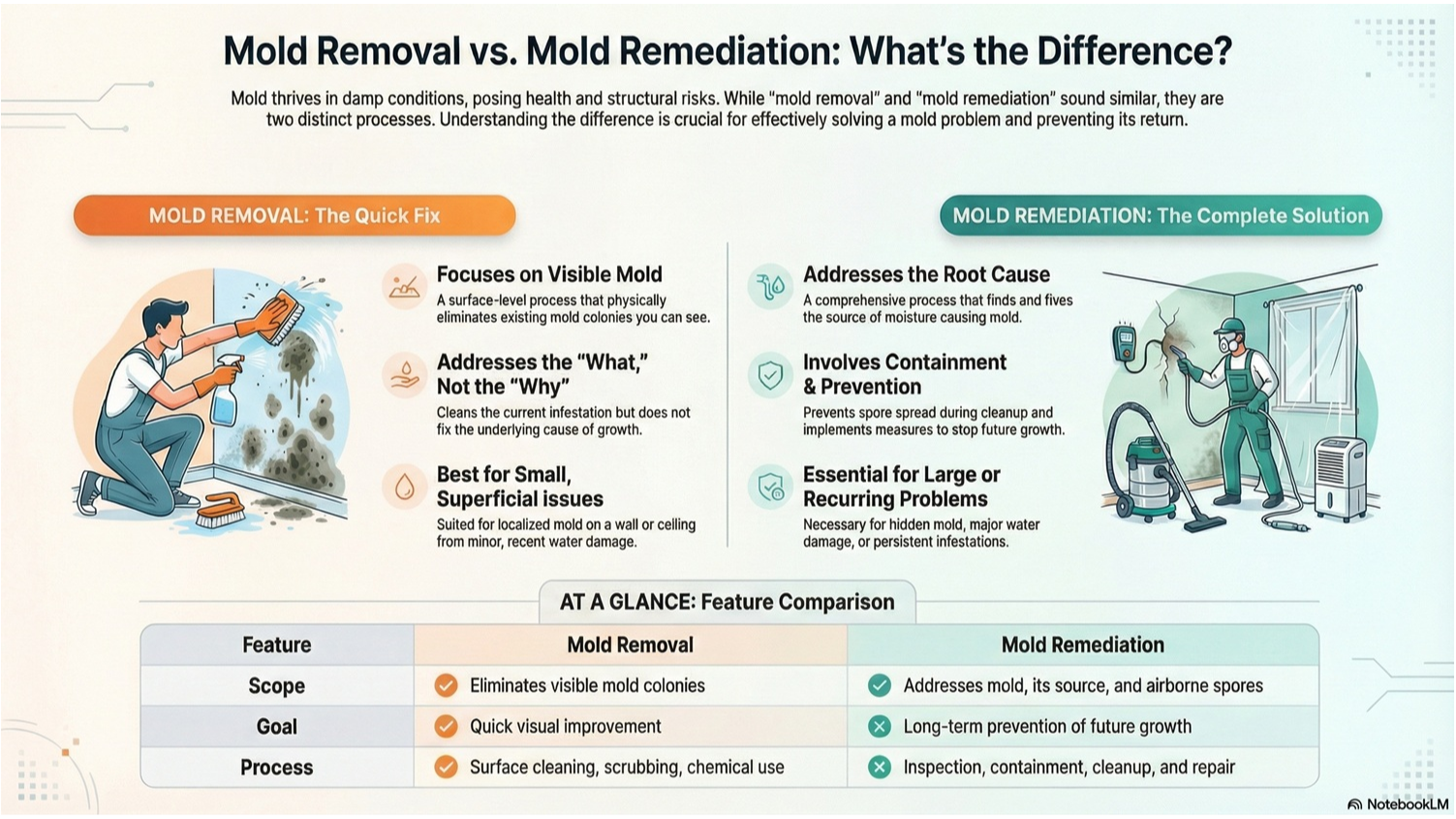

TampaBayMold.net has released a guide that clarifies the distinctions between mold removal and mold remediation, addressing a common misunderstanding among property owners throughout the Tampa Bay region. Mold removal focuses on eliminating visible fungal growth from surfaces, while remediation takes a more thorough approach by identifying and correcting the underlying moisture conditions that allow mold to thrive. This distinction carries significant weight for residential and commercial property owners in humid climates, where surface-level treatments often fail to prevent recurring infestations that compromise both structural integrity and indoor air quality.
More details can be found at https://moldremediation.tampabaymold.net/2026/01/12/is-there-a-difference-between-mold-removal-and-mold-remediation/
The guide draws on regulatory and industry standards to establish when professional intervention becomes necessary. According to the Environmental Protection Agency, infestations covering more than 10 square feet require professional handling, distinguishing small-scale cleanup from extensive remediation efforts. The Institute of Inspection, Cleaning and Restoration Certification’s S520 standard outlines specific procedures that professionals must follow, including containment protocols, moisture source identification, and removal techniques designed to prevent cross-contamination and recurrence. These frameworks provide property owners with clear benchmarks for determining whether a situation demands full remediation rather than simple surface cleaning.
Tampa Bay’s climate presents unique challenges that make moisture control a foundational element of effective remediation rather than an optional add-on. Research indicates that mold thrives in environments where relative humidity exceeds 60 percent, a threshold frequently reached in Florida’s coastal regions. The guide emphasizes that controlling indoor humidity levels below this point prevents spore germination and colony formation, addressing the root cause rather than merely treating symptoms. Without this preventative focus, property owners often face repeated outbreaks that escalate costs and health risks over time.
Health considerations further underscore the importance of choosing full remediation over basic removal. Studies show that between 3 and 10 percent of the U.S. population experiences allergic reactions to mold, with exposure triggering asthma exacerbation, respiratory complications, and other adverse health effects. Professional remediation services typically include post-remediation air quality testing, which verifies that both visible colonies and airborne spore counts have returned to safe levels. This verification step provides assurance that vulnerable occupants—including children, elderly residents, and individuals with compromised immune systems—are protected from ongoing exposure.
A case study from the company’s experience involving a commercial property in Florida demonstrates the measurable benefits of full remediation. After professionals identified and corrected an HVAC system’s humidity issue, the building not only eliminated its mold problem but also achieved improved indoor air quality. This real-world example illustrates how the upfront investment in professional remediation delivers business and health outcomes that surface-level removal cannot replicate, particularly in environments where moisture intrusion remains a persistent threat.
TampaBayMold.net’s guide empowers property owners to make informed decisions by explaining when each approach is appropriate and what long-term results they can expect. The company offers both removal and remediation services, but the educational resource helps readers understand when full remediation becomes necessary to protect their investment and the health of building occupants. Property owners facing mold issues in Tampa Bay’s humid climate can access the full guide and schedule professional consultations to determine the most effective course of action for their specific situation.
For more information, visit https://www.tampabaymold.net
TampaBayMold.net
550 N. Reo St. Suite #300
Tampa
FL
33609
United States
