

Drazen Zigic // Shutterstoc
The surprising science of fireside connection
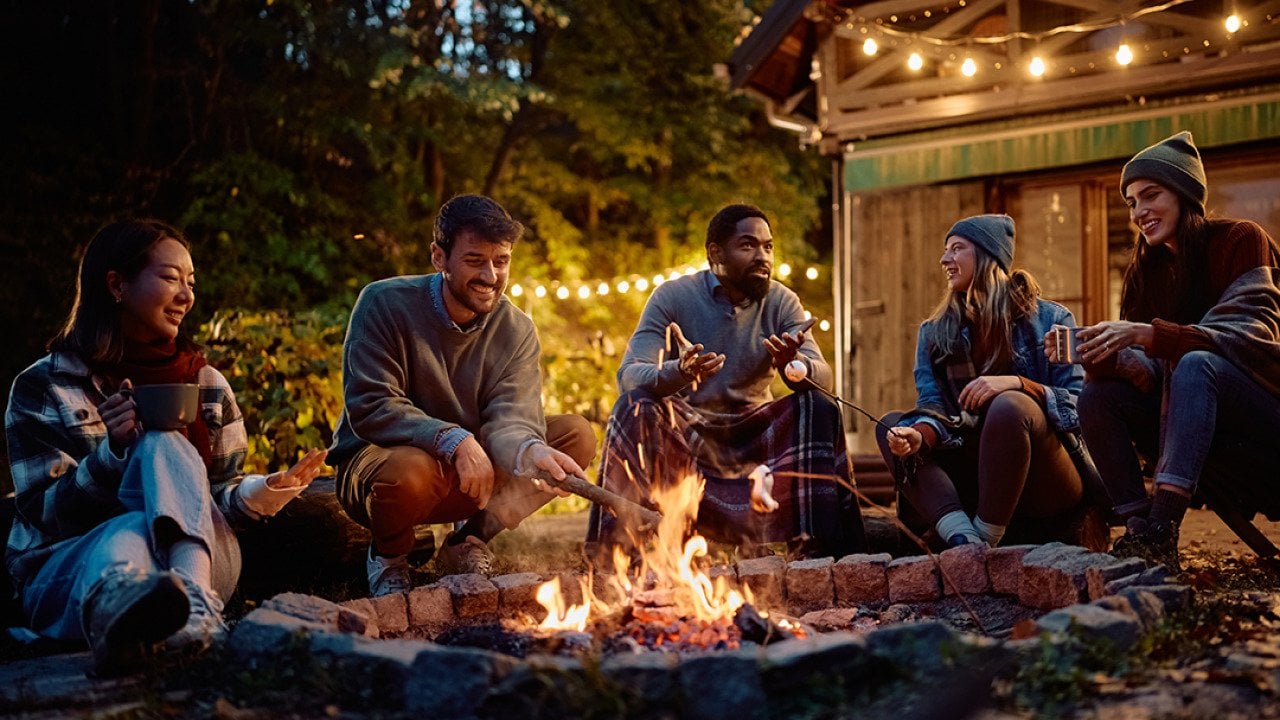
Gathering around a fire, whether it is a bonfire outdoors or a fireplace on date night, is a way to bring people together. Modern Flames explores the physiological and evolutionary evidence behind the human habit of socializing beside a fire.
Campfire Principle
Charles Vogl, an internationally best-selling author who focuses on community, posits in the Campfire Principle that campfires nurture relationships and intimate conversations because, âAt campfires, we have time, proximity, freedom, and intimacy to connect meaningfully with others if we choose.â Even in larger groups, gathering around a campfire fosters a level of intimacy that connects individuals with one another by sharing moments of vulnerability.
The act of gathering around a fire dates far back in our evolutionary history, with anthropologists claiming that the central role of a fire encouraged communication (sharing stories) and reinforced social bonding. This long-standing tradition of storytelling over the fire connects us to one another, making us feel less lonely and more a part of a community.
Fireside Relaxation Study
The sensory details of a fire also create positive physical and mental responses, including easing anxiety, lowering blood pressure, and contributing to mindfulness, according to the Fireside Relaxation Study by the University of Alabama.
âFindings confirm that hearth and campfires induce relaxation as part of a multisensory, absorptive, and social experience,â Professor Chris Lynn concludes. The flicker of the flames and the crackling sounds of the fire burning help you to disconnect from technology and the anxiety and worries that come with modern life.
By giving in to âbeing present,â you gain mindfulness, a meditative state thatâs achieved by focusing oneâs awareness on the present moment. The warmth of the fire also allows you to relax tense muscles, and is linked to a better nightâs sleep.
The âThird Placeâ Theory
The third place effect, introduced by sociologist Ray Oldenburg, argues that people need a third place where they can gather, interact informally, and build community â a separate space from home and work (the âfirst placeâ and âsecond place,â respectively).
Gathering around a fire has long served as a powerful third place. Today, however, thereâs a shift where the âfirst placeâ (home) merges with the âthird place.â Due to rising living costs, overcrowding, shorter hours for free time, and social burnout, the home is now the primary gathering place, which underscores the positive effects of a fireplace or fire pit, which include promoting feelings of belonging and fostering conversation.
Conclusion
Whether you are gathering for your next outdoor bonfire or having wine on date night by your fireplace, when you cozy up to your loved ones and enjoy the effects of the crackling flames, youâre joining a tradition that humans have embraced for thousands of years.
This story was produced by Modern Flames and reviewed and distributed by Stacker.