
Why Every Cleared Professional Needs a Criminal Defense Attorney After a Fairfax DUI Arrest
Fairfax, United States – January 26, 2026 / David Deane Attorney at Law – Fairfax /
How a Criminal Defense Attorney Protects Your Security Clearance After a DUI
(Fairfax, VA – January 2026) For a high-level professional in Northern Virginia, a DUI arrest on I-66 or the Fairfax County Parkway is more than a legal inconvenience—it is a potential career-ending event. In a region where the local economy is powered by the Pentagon, the CIA, and thousands of defense contractors, a criminal charge can jeopardize the “trustworthiness” and “reliability” standards required for access to classified information.
When an individual with everything to lose faces the Fairfax County General District Court, the strategy cannot be limited to just avoiding jail time. It must focus on professional preservation. A skilled Fairfax criminal defense attorney understands that the goal is to protect not just your freedom, but your security clearance and your career. Working with the dedicated criminal defense attorney at David Deane Law allows you to address your legal case while simultaneously managing the administrative fallout with your employer or the federal government.
The TS/SCI Question: Will a Fairfax DUI Conviction Trigger Automatic Revocation?
The fear of “automatic revocation” is the most common anxiety for federal employees and contractors. However, it is important to separate myth from reality. In the federal adjudicative process, there is no such thing as an “automatic” loss of a TS/SCI clearance for a single misdemeanor DUI conviction. Instead, the government utilizes the “Whole Person Concept” to determine if an individual remains eligible for access to classified information.
Guideline G: Alcohol Consumption
Under Security Executive Agent Directive (SEAD) 4, adjudicators look primarily at Adjudicative Guideline G: Alcohol Consumption. The concern for the government is not necessarily the drinking itself, but whether the behavior indicates questionable judgment, unreliability, or an inability to control impulses—all of which increase the risk of an unauthorized disclosure of classified information.
A single DUI in Fairfax is often a “mitigable” event if:
-
It was an isolated incident and not part of a pattern of alcohol abuse.
-
The individual cooperated fully with law enforcement at the time of the arrest.
-
The individual took immediate, proactive steps toward rehabilitation.
However, the risk shifts significantly if there are aggravating factors, such as an exceptionally high Blood Alcohol Content (BAC) of 0.15% or higher, a refusal to submit to a breathalyzer, or if it is a subsequent offense. In these cases, the adjudicator may see a “pattern of criminal conduct” (Guideline J) or a “failure to follow rules and regulations” (Guideline E), which are much harder to overcome. Consulting a Fairfax criminal defense lawyer early in the process is an important step to building a record that favors mitigation.
The Self-Reporting Dilemma: Navigating SEAD-3 Requirements
For defense contractors and federal employees, the clock begins ticking the moment the handcuffs are applied, not when the judge renders a verdict. Under SEAD-3 (Reporting Requirements for Personnel with Access to Classified Information), covered individuals have a continuing obligation to report “Reportable Activities.”
Arrest vs. Conviction
A common mistake is waiting for the court date to notify a Facility Security Officer (FSO). In most cases, the reporting requirement is triggered by the arrest itself. Failing to report an arrest—even if the charge is eventually dismissed in Fairfax court—can lead to a “Lack of Candor” finding. Ironically, the government is often more forgiving of a single DUI than they are of an attempt to hide it. At David Deane Law, their criminal defense lawyer can advise you on how to report the incident truthfully without providing unnecessary self-incriminating details.
Strategic Reporting Checklist:
-
Timing: Reporting should typically occur within 24 to 72 hours, or “as soon as possible” as defined by specific agency policies.
-
Scope: The report should be factual but concise. It is possible to notify an FSO of the incident and the pending legal process without providing detailed admissions of guilt.
-
Consultation: Before speaking with an FSO, a professional should consult with a defense attorney to ensure the disclosure satisfies the security requirement while protecting their constitutional rights.
Mitigation as a Career Defense Strategy
Because the “Whole Person Concept” allows for mitigation, the defense strategy at David Deane Law starts the day the client walks through the door. The goal is to build a “Mitigation Package” that speaks the language of security adjudicators.
Proactive steps may include:
-
Early VASAP Enrollment: Voluntarily starting the Alcohol Safety Action Program before the court orders it.
-
Private Clinical Assessments: Obtaining a professional evaluation from a licensed substance abuse counselor.
-
Community Service: Documenting positive contributions to the Fairfax community.
When an Arlington criminal defense lawyer presents these steps to a Fairfax prosecutor, it can often lead to a reduction in charges (such as a “Wet Reckless”). More importantly, these same steps serve as powerful evidence that the individual has “successfully resolved the security concern” and remains a reliable steward of national secrets. Engaging a Fairfax criminal defense attorney helps ensure these proactive measures are documented in a way that satisfies both the court and security adjudicators.
Continuous Evaluation (CE) and the “Rap Back” System
In years past, a security clearance holder might wait years for a reinvestigation to reveal a Fairfax DUI arrest. However, under the modern Continuous Evaluation (CE) program, the government uses automated record checks—often referred to as “Rap Back” services—to receive near-real-time notifications of criminal activity.
When a person is fingerprinted at the Fairfax County Adult Detention Center, that data is often transmitted to the FBI. For clearance holders enrolled in CE, this triggers an immediate alert to their agency’s security office. This technological shift has eliminated the “wait and see” strategy. David Deane Law assists clients in preparing for the fallout of these automated alerts, ensuring the narrative is framed by the defense rather than the arrest report. A criminal defense lawyer can prepare you for the inevitable investigation that follows these alerts.
Professional Certifications and the CDL Contractor
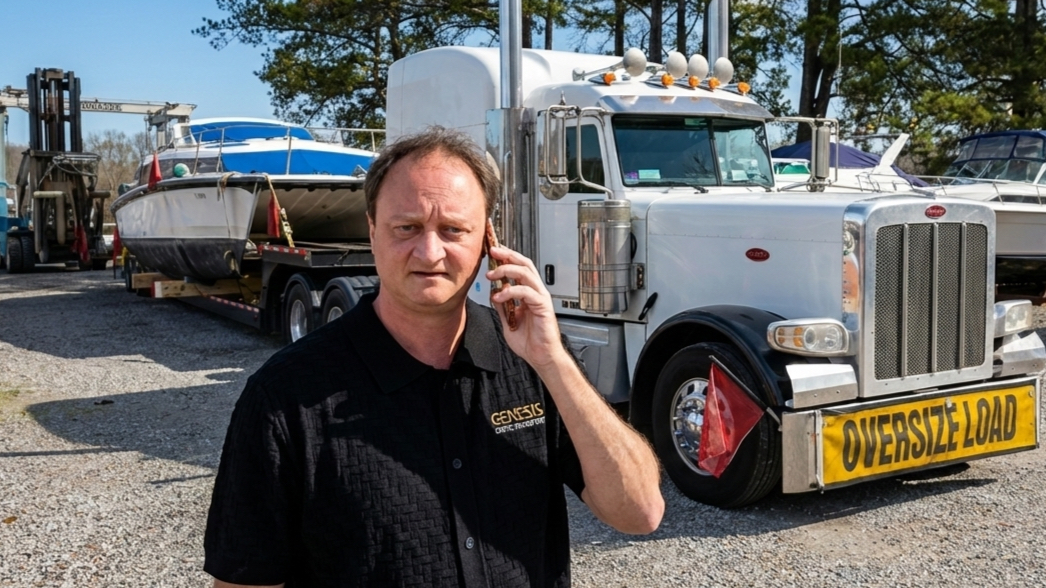
For many contractors in Northern Virginia, a standard driver’s license is only part of the equation. Many roles require a Commercial Driver’s License (CDL) or specialized certifications. Under Virginia law, a DUI conviction results in a mandatory one-year disqualification of CDL privileges, even if the offense occurred in a personal vehicle. Unlike a standard license, there are no restricted CDLs available for work purposes in Virginia. For a contractor whose job description requires operating a commercial vehicle, a Fairfax DUI is an immediate threat to their employment eligibility.
The “Wet Reckless” Negotiation in Fairfax County
In the Fairfax County General District Court, the Commonwealth’s Attorney has the discretion to offer a plea to reckless driving (alcohol related), commonly known as a “Wet Reckless.” While still a Class 1 misdemeanor, it carries significantly less “adjudicative weight” in a security clearance review.
From a security perspective, a reckless driving charge does not carry the same heavy presumption of “alcohol abuse” as a DUI conviction. When an Arlington criminal defense attorney successfully negotiates a reduction, it provides the client with a much stronger position when answering Guideline G concerns.
Managing the “Public Trust” Position
Not every professional in Northern Virginia holds a TS/SCI, but many hold “Public Trust” positions (SF-85P). A DUI conviction can lead to an “Unfavorable Suitability Determination,” resulting in the loss of a government contract or position. Adjudicators for public trust roles focus heavily on the “integrity” component. By focusing on transparency and immediate remedial action, a Fairfax criminal defense lawyer helps clients maintain the high standard of conduct required for these sensitive roles. Utilizing a defense attorney with experience in public trust positions is essential for these unique cases.
Frequently Asked Questions: DUI & Security Clearances
The following questions represent the most common concerns voiced by federal employees and contractors navigating the intersection of Fairfax traffic law and federal adjudicative guidelines.
Is a first-offense DUI an automatic disqualifier for a TS/SCI?
No. There is no federal rule that mandates the automatic revocation of a Top-Secret clearance for a single misdemeanor DUI. Adjudicators follow the “Whole Person Concept,” looking for a pattern of behavior rather than an isolated lapse in judgment. However, a high BAC (above 0.15%) or a refusal to provide a breath sample can make the mitigation process significantly more difficult.
If my Fairfax DUI is reduced to Reckless Driving, do I still have to report it?
Yes. Under SEAD-3, most agencies require the reporting of the arrest and the final disposition, regardless of whether the charge was reduced. Attempting to hide a “Wet Reckless” conviction because it isn’t technically a DUI can be viewed as a lack of candor—often a far more serious security concern than the traffic offense itself.
Will my FSO find out about my arrest even if I don’t tell them?
Almost certainly. With the implementation of Continuous Evaluation (CE) and “Rap Back” systems, federal agencies receive automated alerts from the FBI when a clearance holder is fingerprinted during a Fairfax arrest. Relying on the government not to find out is a high-risk strategy that usually leads to an immediate suspension of access.
Can I use my security clearance to get a better deal in Fairfax court?
While a prosecutor may occasionally consider a defendant’s clean background and career stakes, “having a clearance” is not a legal defense. In fact, some judges may hold professionals to a higher standard. Instead, a Fairfax criminal defense lawyer uses your career stakes as a reason to negotiate for a non-conviction or a reduced charge that specifically avoids the “Alcohol Abuse” label in security files.
Does Virginia’s Clean Slate Act mean my DUI won’t show up on my next SF-86?
No. As discussed earlier, DUI convictions are currently excluded from the Virginia Clean Slate Act. Even if the law changes in the future, federal background investigators for security clearances have specific authority to see “sealed” or “expunged” state records.
How do I explain an Ignition Interlock Device to my co-workers or boss?
This is a major privacy concern for NoVa professionals. While the device is discreet, it does require breath samples while driving. Many clients choose to keep their legal matters private, but if you are required to drive a government or company vehicle, you must disclose the restriction, as driving an unequipped vehicle is a separate criminal offense in Virginia.
Take Strategic Action with a Top Criminal Defense Attorney at David Deane Law
A DUI arrest in Fairfax, VA, is a crisis of both law and career. By addressing the criminal charges, the SEAD-3 reporting requirements, and the long-term adjudicative concerns simultaneously, you can protect your livelihood.
David Deane Law provides the high-stakes advocacy required for those with everything to lose. If you are a cleared professional facing charges, do not leave your future to chance. Engaging a criminal defense attorney as early as possible is the first step in building a defense that protects your professional life.
Ready to protect your career? Contact David Deane Law to schedule a free, confidential consultation with an experienced Fairfax criminal defense lawyer.
Media Contact:
David Deane Law
4015 Chain Bridge Road #38
Fairfax, VA 22030
(703) 721-8748
URL: Fairfax Criminal Defense Lawyer – David Deane Law


Contact Information:
David Deane Attorney at Law – Fairfax
4015 Chain Bridge Rd. #38
Fairfax, VA 22030
United States
David Deane
(703) 224-4403
https://daviddeanelaw.com/